|
Product Details:
Payment & Shipping Terms:
|
| Forging Ratio: | ≥3.5 | MOQ: | 1PC |
|---|---|---|---|
| Molding Style: | Forging | Max Weight: | 50T |
| Delivery Time: | 30-60Days | Melting Proce: | EF+LF+VD |
| Material: | Steel | Heat Treatment: | N+T Q+T |
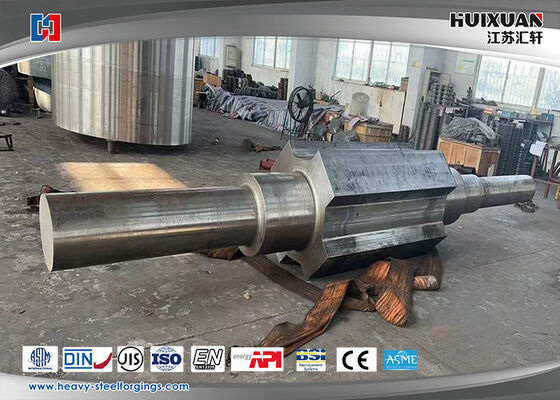
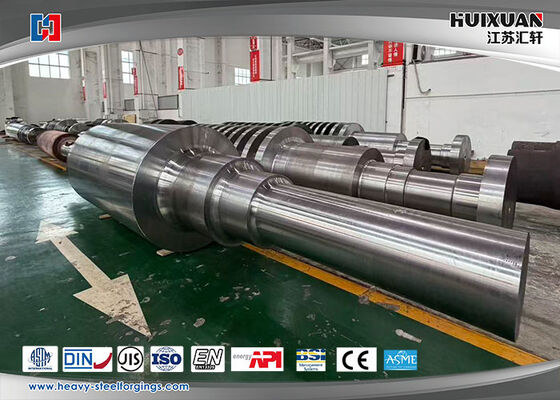
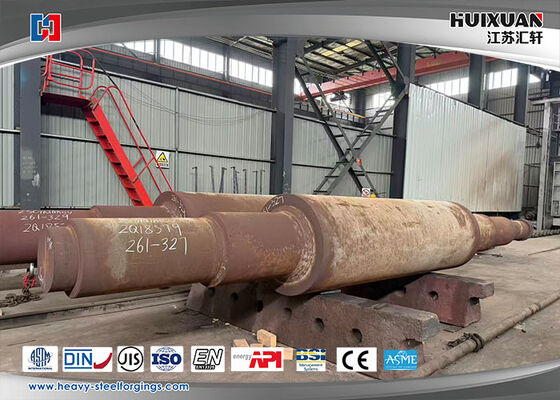
Heavy Steel Forgings GB/ASTM/DIN Material Heavy steel shaft,Motor Rotor
Motor Rotor: The Rotating Heart of Electric Motors
Every electric motor contains two core functional parts: the stationary stator and the spinning rotor. As the only rotating component, the motor rotor converts electromagnetic force into mechanical torque, driving fans, pumps, industrial equipment, electric vehicles and household appliances. Without a well‑engineered rotor, motors cannot deliver power reliably or efficiently. This article introduces rotor categories, real‑world applications, key materials and forging‑based manufacturing workflows.
Main Types and Typical Applications
Rotor designs are tailored to different working scenarios.
Squirrel‑cage rotor
This is the most widely used rotor for AC induction motors. Conductive bars and short‑circuit end‑rings form a cage‑like structure. It needs no brushes or slip‑rings, featuring low cost and robust mechanical performance.
Applications: industrial pumps, conveyor belts, air compressors, household air‑conditioner compressors, general‑purpose factory motors.
Wound rotor
Equipped with insulated multi‑phase windings, connected to external circuits via slip rings and carbon brushes. It enables flexible torque and speed adjustment.
Applications: large‑capacity heavy‑load equipment, such as mine hoists, large cranes and rolling mill drives.
Permanent‑magnet rotor
Embedded or surface‑mounted permanent magnets generate magnetic fields. It achieves high energy efficiency, compact size and high power density. No excitation current is consumed inside the rotor.
Applications: new‑energy vehicle drive motors, industrial servo motors, robot joints, high‑speed blowers and drone power systems.
Core Materials for Motor Rotors
Steel is the dominant structural material for motor rotors, meeting demanding mechanical requirements for high‑speed rotation, torque transmission and centrifugal load resistance.
Carbon steel & alloy steel: Used for rotor shafts and integrated heavy‑duty rotor bodies. Steel provides high tensile strength, good toughness and excellent fatigue resistance. It can sustain heavy mechanical shock and long‑term high‑speed operation, which is essential for large‑size and high‑load motor rotors. For high‑performance rotors, modified alloy steel is selected to further improve hardness and anti‑fatigue properties.
Key Manufacturing Processes (Forging‑oriented)
Forging is a critical forming process for high‑strength motor rotors, improving internal metal grain structure to achieve superior mechanical performance compared with casting.
Raw material preparation
Solid steel billets are selected according to rotor dimension requirements. Surface defects are removed before heating.
Hot forging
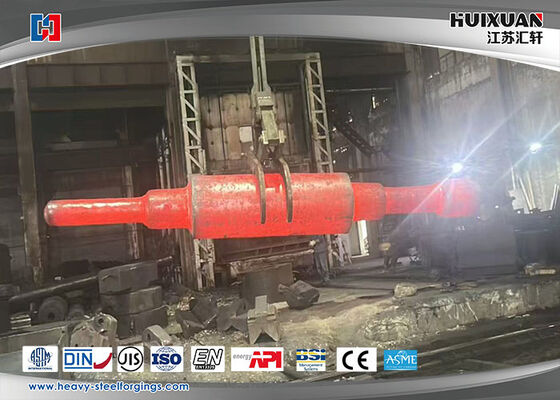
The steel billet is heated to proper forging temperature, then deformed under heavy forging press. The forging operation reshapes the billet into rough rotor blank. Metal grains flow along the force‑bearing contour of the rotor, eliminating internal voids and loosening. The forged blank obtains high density and outstanding mechanical strength, suitable for rotors working under heavy‑load and high‑speed conditions.
Heat treatment
Post‑forging heat treatment including quenching and tempering is carried out. This optimizes steel hardness, toughness and internal stress state, avoiding deformation or cracking during later service.
Precision machining
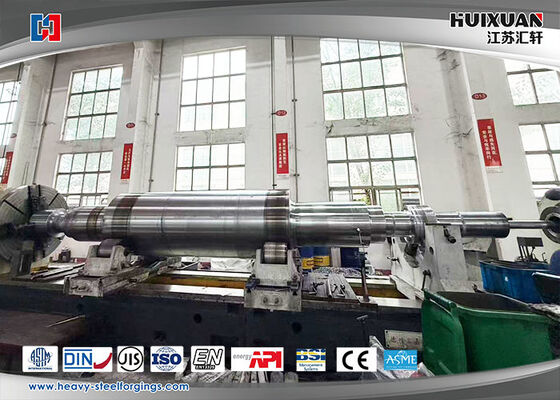
The forged rotor blank goes through turning, boring and grinding. Outer diameter, shaft fitting dimension and end‑face flatness are machined to strict tolerance requirements.
Dynamic balancing
This is an indispensable quality step. Unbalance mass is removed by milling or drilling, following ISO 1940‑1 balancing standards. Poor balancing leads to severe vibration, noise and bearing damage in operation.
Final inspection
Dimensional measurement, non‑destructive testing for forging defects and visual inspection are performed before subsequent motor assembly.
Products reference:
| Material | 50Mn,DG20Mn,25Cr2Ni4MoV,34CrNiMo6 |
|
Max weight |
50T |
| Application |
Connection shaft of between main motor and reducer,main motor and gear seat,main motor and universal spindle |
|
Melting process |
EF+LF+VD |
|
Production process |
Forging+heat treatment+rough machining+finish machining
|
|
Forging ratio |
≥3.5 |
|
Applicable standard |
ASTM,ASME,DIN,JIS,ISO,BS,API,EN |
|
Executive standard |
JB/GB/EN/DIN/JIS/ASME/ASTM/ISO |
|
Certification authority |
ABS,DNV,BV,GL,KR,CCS,LR,NK,RINA,RS. |
|
Delivery terms |
Rough machining(N+T);finish machining(Q+T) |
|
Test machine |
Spectrograph,UT device,tensile and compact test machine,metalloscope,outside micrometer,bore dial indicator,hardness test machine |
|
Service |
Our service included the forging, process, heat treatment, finish machining, package, local logistics, customers clearance and maritime transport. We took the customer’s requirements as the principal thing, and pay attention on the products quality. |
Process procedure:
Forging process flow quality control:
Custom properties
|
Material elements |
C | Si | Mn | P | S | Cr | Ni | Mo | V |
| 50Mn | 0.48-0.56 | 0.17-0.37 | 0.70-1.00 | ≤0.035 | ≤0.035 | ≤0.25 | ≤0.30 | -- | - |
| DG20Mn | 0.17-0.24 | 0.17-0.34 | 0.70-1.00 | ≤0.035 | ≤0.035 | ≤0.25 | ≤0.25 | -- | |
| 25Cr2Ni4MoV | ≤0.25 | ≤0.23 | ≤0.53 | ≤0.006 | ≤0.004 | ≥1.62 | ≥3.75 | ≥0.33 | ≥0.09 |
| 34CrNiMo6 | 0.30-0.38 | ≤0.040 | 0.50-0.80 | ≤0.035 | ≤0.035 | 1.30-1.70 | 1.30-1.70 | 0.15-0.30 |
|
Mechanical property |
Dia.(mm) |
TS/Rm(Mpa) |
YS/Rp0.2(Mpa) |
EL/A5(%) |
RA/Z(%) |
Type Of notch |
Impact energy |
HBW |
| 50Mn | Ø25 | ≥645 | ≥390 | ≥13 | ≥40 | V | ≥31 | ≤255HBS |
| DG20Mn | Ø25 | ≥450 | ≥275 | ≥24 | ≥50 | |||
| 34CrNiMo6 | Ø15 | 750-900 | 450-600 | ≥13 | ≥55 | V | -40℃≥20 | ≤269HBS |
Commerce clause
| MOQ | 1PC |
| Delivery time | 30-60 Days |
| Package | Plywood pallet,steel frame |
| Delivery terms | FOB;CIF;CFR;DDU; |
| Payment terms | T/T,LC |
| Type of shipping |
By ocean,air |
Advantage
![]()
Contact Person: Mr. Arnold
Tel: +86-15-15-15-81-878
Fax: 86-512-58360318